
CO2 Fire Suppression Systems
Explore Jianan CO2 fire suppression systems for industrial hazards. Compare total-flooding, local-application, high-pressure, and low-pressure systems.
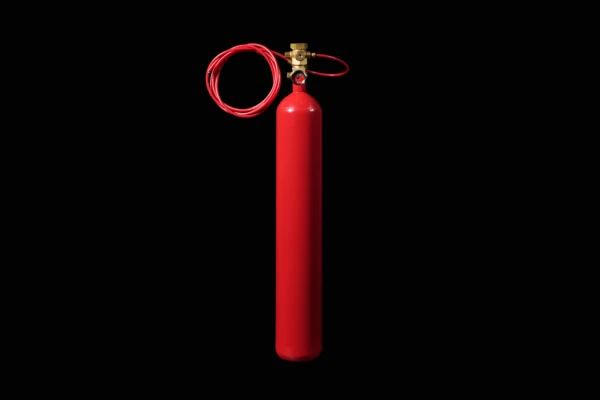
Industrial CO₂ Systems for Enclosed and Localized Hazards
Jianan Fire Protection Technology supplies fixed CO₂ fire suppression systems for industrial machinery, process equipment, electrical hazards, and flammable-liquid applications.
CO₂ suppresses fire mainly by reducing oxygen around the fuel; it is electrically nonconductive and leaves no extinguishing-agent residue.
Available solutions include high-pressure, low-pressure, total-flooding, local-application, single-zone, and multi-zone systems, but strict personnel-safety controls are required because extinguishing concentrations can be fatal.
JIANAN CO₂ Fire Suppression System Products
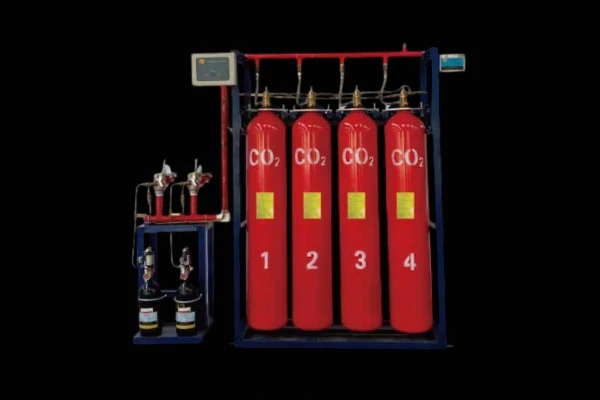
CO₂ System Features
- Total-Flooding and Local-Application Protection: CO₂ can protect an enclosed volume or discharge directly onto a defined industrial hazard.
- High-Pressure and Low-Pressure Storage: Systems can use individual high-pressure cylinders or centralized refrigerated low-pressure tanks.
- Residue-Free and Electrically Nonconductive: CO₂ leaves no water, foam, powder, or chemical-agent residue after discharge.
- Engineered Distribution: Agent quantity, pipe size, nozzle type, discharge rate, and duration are calculated for the actual hazard.
- Single-Zone and Multi-Zone Options: Systems may protect one hazard or use selector valves to serve several separate zones.
- Automatic and Manual Release: Available controls can include detection, alarms, discharge delay, manual release, and equipment shutdown interfaces.
- Personnel Safety Controls: Protected areas may require alarms, evacuation delay, access control, ventilation, warning signs, and emergency procedures.
- Maintenance Lockout: A supervised lockout can prevent unintended CO₂ discharge while personnel enter, inspect, or service the protected area.
- Fuel and Ventilation Shutdown: Fans, dampers, machinery, and fuel supplies may need to stop before or during discharge.
- Project-Specific Engineering: System design depends on the fuel, equipment geometry, enclosure, airflow, occupancy, temperature, and pipe route.
Applications
Typical CO₂ fire suppression applications include:
- Turbine and generator enclosures
- Industrial machinery and process equipment
- Printing presses
- Dip and quench tanks
- Hydraulic power units and oil reservoirs
- Paint and coating equipment
- Flammable-liquid process equipment
- Transformer and electrical equipment enclosures
- Duct and process enclosures
- Normally unoccupied machinery rooms
- Marine machinery spaces, subject to project requirements
CO₂ is mainly used where personnel exposure can be strictly controlled. It should not be selected where safe evacuation, system lockout, ventilation, or fuel isolation cannot be reliably provided.
Reactive metals, self-oxidizing materials, uncontrolled fuel releases, combustible-dust hazards, and deep-seated fires require separate engineering review.
Discuss Your Project
Frequently Asked Questions
Find quick answers about product selection, installation, compliance, and customization.
What is the difference between total-flooding and local-application CO₂ systems?
A total-flooding system fills an enclosure with CO₂, while a local-application system directs CO₂ onto a specific piece of equipment or surface.
What is the difference between high-pressure and low-pressure CO₂ systems?
High-pressure systems use individual cylinders, while low-pressure systems use a refrigerated bulk-storage tank for larger agent quantities.
Can a CO₂ system be installed in an occupied area?
CO₂ extinguishing concentrations can rapidly cause unconsciousness or death, so total-flooding systems are normally limited to unoccupied or strictly controlled areas.
Why is CO₂ dangerous to personnel?
High concentrations affect breathing, circulation, and consciousness, and the danger is not limited to oxygen displacement.
Does a CO₂ system require a pre-discharge alarm and delay?
These safeguards are commonly required where personnel may be exposed, but they do not replace evacuation, lockout, access control, and ventilation procedures.