
Dry Chemical Fire Suppression Systems
Explore Jianan dry chemical fire suppression systems for industrial equipment, flammable-liquid hazards, and process applications.
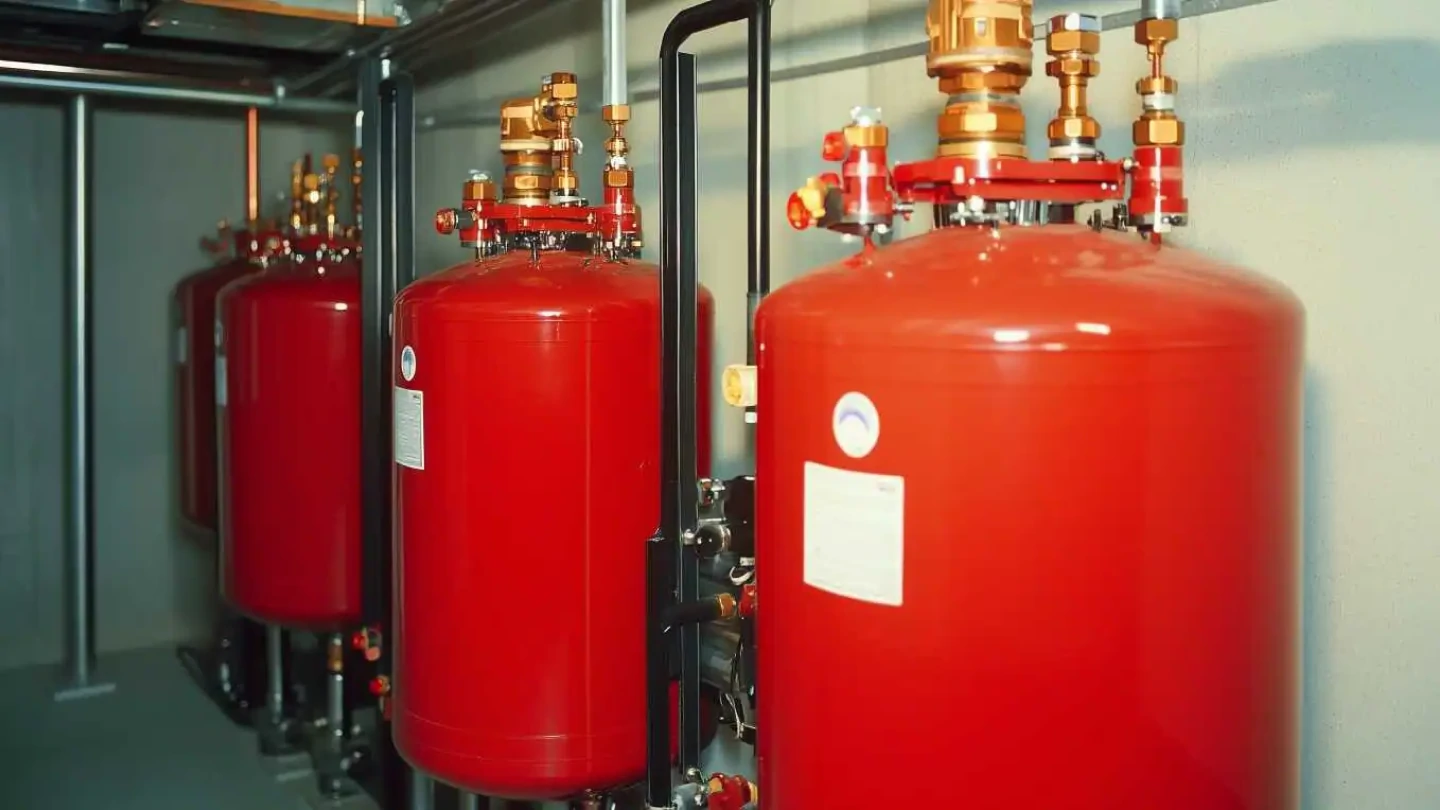
Fast-Acting Suppression for Industrial Fire Hazards
Jianan Fire Protection Technology supplies fixed dry chemical fire suppression systems for industrial machinery, process equipment, flammable-liquid hazards, and energized electrical equipment.
Dry chemical agents rapidly suppress flame through chemical inhibition, while ABC formulations can also form a barrier over suitable Class A combustibles.
These systems provide fast flame knockdown but leave powder residue and offer limited cooling, so cleanup, fuel isolation, and reignition control must be considered.
JIANAN HFC-227ea Fire Suppression System Categories


Dry Chemical System Features
- Rapid Flame Knockdown: Dry chemical agents quickly interrupt combustion and control open flame.
- ABC and BC Agent Options: ABC agents cover suitable ordinary combustibles, flammable liquids, and energized equipment, while BC agents focus mainly on flammable-liquid, gas, and electrical hazards.
- Engineered and Pre-Engineered Systems: Engineered systems are calculated for a specific hazard, while pre-engineered systems must remain within defined piping, nozzle, and coverage limits.
- Local-Application and Total-Flooding Protection: Systems can discharge directly onto defined equipment or distribute agent throughout a suitable enclosure.
- Stored-Pressure and Cartridge-Operated Options: The expellant gas may be stored with the agent or supplied from a separate cartridge or cylinder.
- Automatic and Manual Release: Systems can support fire detection, manual activation, alarms, equipment shutdown, ventilation shutdown, and fuel isolation.
- Powder Residue and Cleanup: Discharge leaves dry chemical residue that can contaminate equipment, surfaces, ventilation paths, and electrical components.
- Limited Cooling and Reignition Control: Dry chemical provides little sustained cooling, so hot surfaces or continued fuel flow may cause reignition.
- Project-Specific Design: Agent type, quantity, piping, nozzles, detection, and shutdown functions are selected for the actual fuel, equipment, airflow, and operating conditions.
Dry Chemical Fire Suppression Systems Overview
| Feature | Dry Chemical Fire Suppression System | Clean Agent Fire Suppression | Aerosol Fire Suppression |
| Fire Classes | A, B, C, E | A, B, C | A, B, C, E |
| Suppression Speed | <10 seconds | <10 seconds | Moderate (≤30 seconds) |
| Suppression Mechanism | Interrupts chemical chain reaction | Displaces oxygen & absorbs heat | Absorbs heat & disrupts fire |
| Residue & Cleanup | Powder residue (varies by agent) | No residue | Minimal residue |
| System Size | Scalable for industrial applications | Requires pressurized tanks | Compact, self-contained |
| Re-Ignition Prevention | Moderate | High | High |
| Environmental Impact | No ozone depletion, minimal particulates | Zero ozone depletion | Low toxicity |
| Compliance & Certification | NFPA 17, NFPA 2001, UL 1254, FM Global | NFPA 2001, UL 2166, FM Global | ATEX, UL |
| Ideal Applications | Fuel storage, spray booths, industrial sites | Data centers, telecom hubs | Energy storage, confined spaces |
Applications
Typical dry chemical fire suppression applications include:
- Paint and coating spray equipment
- Flammable-liquid process equipment
- Dip and quench tanks
- Fuel handling and transfer equipment
- Pumps, compressors, and hydraulic power units
- Industrial machinery and production lines
- Generators and selected power equipment
- Chemical process equipment
- Vehicle and mining equipment
- Wind turbine machinery spaces
Vehicle, mining, and wind-turbine applications require product-specific testing, nozzle layouts, shutdown controls, and installation limits.
Dry chemical is generally unsuitable for data centers, server rooms, clean rooms, museums, medical imaging rooms, and other environments where powder contamination could cause unacceptable damage or downtime.
Discuss Your Project
Frequently Asked Questions
Find quick answers about product selection, installation, compliance, and customization.
What is the difference between ABC and BC dry chemical?
ABC agents are typically monoammonium-phosphate based and cover suitable Class A, Class B, and energized electrical hazards. BC agents usually use sodium- or potassium-bicarbonate formulations for flammable-liquid, gas, and electrical hazards.
What is the difference between engineered and pre-engineered systems?
An engineered system is calculated for a specific hazard and pipe network. A pre-engineered system uses predetermined containers, nozzles, piping limits, and coverage conditions.
What is the difference between local application and total flooding?
Local application directs agent onto defined equipment or surfaces, while total flooding distributes agent throughout a suitable enclosed volume.
What is the difference between stored-pressure and cartridge-operated systems?
Stored-pressure systems keep the agent and expellant gas in one pressurized container. Cartridge-operated systems use a separate gas cartridge or cylinder to pressurize the agent container during activation.
Does dry chemical damage electrical equipment?
Dry chemical can suppress fires involving energized equipment, but the powder may contaminate contacts, ventilation passages, and sensitive components. Inspection and extensive cleaning may be required after discharge.